Category: Anglais

  • Mental Health & COVID

    Mental Health & COVID

    Mental Health & COVID

    • 1 avr. 2022
    • 2 min de lecture

    By Christian Malatesta

    This past year has not been easy for anyone, especially for someone like me who is living with autism spectrum disorder (ASD). My name is Christian Malatesta, I am 25 years old, I have cerebral palsy, and was diagnosed with ASD at the age of five. Why was 2020 extremely difficult? The lack of social gatherings has posed a major challenge for many, nonetheless, having to social distance has taught me a lot about myself and my disability.
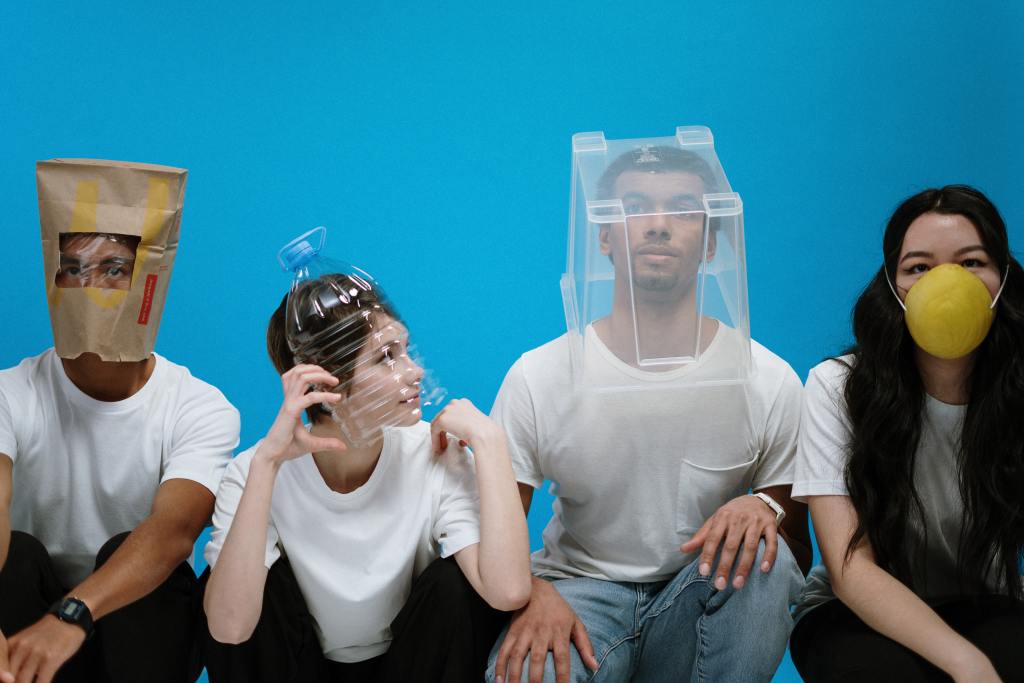
    Challenges of COVID and Mental Health

    There is a common belief that people with ASD are not social, however this is not the case. Many of us enjoy being around others and this year has been especially challenging because of the lack or limited social interaction available. Not everyone with ASD enjoys spending hours alone or on electronics. Being social means having support systems like your friends and family. With a smaller network of those with whom we can interact, being unable to attend school and with uprooted routines and structure to our days, our mental health is at an increased risk. In addition, the supports that are available are limited and the lack of face-face connection can increase our stress levels.

    Supporting your Mental Health

    There are many things that can be done to support your mental health during these unprecedented times. Adapting is not always easy, but it is necessary. I found out the hard way! I have been able to accept the fact that my social interactions need to look a little different. By seeing the friends that I can (e.g., wearing masks, driveway visits, etc.), and using safe platforms for social purposes (e.g., Autism Support Groups). A key to one’s healthy mindset includes being aware of traps that tend to draw you inward and keep you from doing all the things that are supportive to your mental health. Working out, meditating, reading, checking-in with professionals, focusing on hobbies, and my spirituality are ways that I have been able to reduce my stress levels and stay positive.
    Learning to deal with the cards you are dealt

    While learning to accept a disability can take years, 2020 and COVID catapulted me to face many realities. I may not always view the world with the same lens as others, however, being in the same storm as everyone else teaches you to accept everyone (including yourself) for what you are experiencing. I am getting better at learning to be patient and accepting of myself. You cannot accept others until you learn to accept yourself.

    Final Thoughts

    I wish for everyone to learn how to accept themselves as they are with all their beautiful flaws and not see them as weaknesses. Look inward, accept the challenges instead of fighting against them, and learn to rise above. Shifting your mindset from a negative one to a positive one is key.

    Without COVID, I would not have had the time to do self-reflection and learn more about what my disability means to me. I know I still have many goals to reach, but I am confident that I will get there on my own time.
  • Me: Struggles of Growing Up Without My ASD Diagnosis (Part 2)

    Me: Struggles of Growing Up Without My ASD Diagnosis (Part 2)

    Me Struggles of Growing Up Without My ASD Diagnosis (Part 2)

    • 1 avr. 2022
    • 2 min de lecture

    I started to go to the library to rent all kinds of books, it was quiet, and I was surrounded by knowledge, I loved it. Unfortunately, I had a lot of trouble reading them as I suffer from dyslexia. I would have less trouble with physics and mathematics, but I kept trying anyways. It was the only way to learn what I found interesting and get answers. The bad part of learning a lot by yourself at a young age is not knowing where to start and how to continue. I found myself always going back and forward all the time, not knowing I needed prior knowledge to fully understand what I was learning. Changing fields constantly, but always coming back to each of them, as curiosity would overwhelm me. On the bright side, every new little thing I learned got to be processed with all I already knew, and the new connections and discoveries I made were very rewarding. Looking back, I wish I took my time or took lessons to learn one thing very well. I could have taken the discipline and know-how and reproduce it on other things I wanted to learn.

    I think imagination and creativity is a big part of being on the spectrum. I found my way mostly through playing musical instruments and drawing. Music would put my mind and mood at ease, and drawing would make my mind chase away the traffic so I could focus on what I was doing. Being stuck in your own mind is no gift when growing up, the feeling of being an imposter and not understanding people is not pleasant. Luckily, now there is more awareness and help out there for young people with ASD.

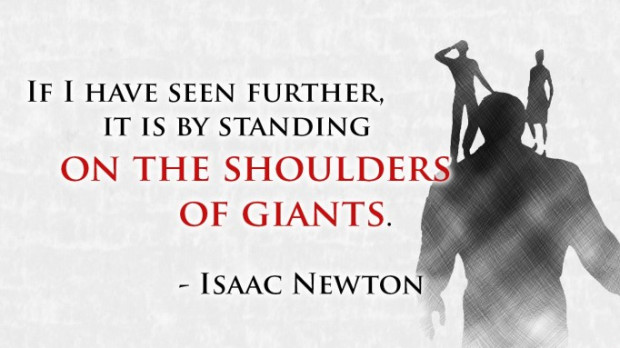
    Everyone deserves a chance to unleash their full potential and contribute to the world. My favorite metaphor “standing on the shoulders of giants” is exactly how I felt and will always see the world. It has always motivated me to take part and go out of my comfort zone to learn more and do more. Hopefully, now I can help others do so as well.

  • Me: Struggles of Growing Up Without My ASD Diagnosis (Part 1)

    Me: Struggles of Growing Up Without My ASD Diagnosis (Part 1)

    Me: Struggles of Growing Up Without My ASD diagnosis (Part 1)

    • 1 avr. 2022
    • 3 min de lecture

    When I was a kid, I didn’t really fit in with others, the way they acted, the excitement they had, the way they interacted with each other. I’ve always been more of an observer and didn’t act like everyone else. I remember watching my friends playing around and asking myself in my head ‘’why do they look so happy, why are they having fun, I don’t get it’’. Questioning yourself at a very young age increases your self-awareness. You start questioning everything in your head thinking, is everyone questioning and talking to themselves in their heads also? If so, is what I’m seeing the reality or a big act.

    I was a very curious kid with a lot of questions. I was fascinated about everything and wanted to know how everything worked: why is the sky blue, why are there 365 days in a year, what is this whole evolution thing etc. Sadly, nobody could give me the answers, or more in-depth answers, that I needed. There was no internet at that time, so information was limited. The excitement that other people had for playing around, I think I had that excitement, but for knowledge. Now with the internet, getting answers is much easier.

    Growing up I was not the best communicator. The information moved fast in my head, but could only go out at one speed. I didn’t think about how others were processing what I was saying or if my messages were getting through to them. Explaining myself and telling stories was the hardest, I never knew where to start and finish. I would start in the middle of a story and mix the end and beginning, adding little bits here and there probably making no sense to others, but it was clear in my head. Now I have learned to keep it more simple and structured however, it’s still easy to get overwhelmed and go on and on. After so many misinterpretations with others in the past, now I try to make sure everybody understands me.

    The conversations I had with people around me were not that stimulating. I needed to talk and learn about science, history, art, and how everything works. While I was fascinated by so much, not seeing others being that passionate about wanting to know everything about everything was confusing to me. I went on trying to fit in when I could, but mostly I would observe.

    I spent most of my time alone, I didn’t get invited to all the events and birthdays. I guess I wasn’t that exciting to be around although, I wasn’t very proactive in reaching out as well. Being alone made me spend a lot of time in my own little world: fantasizing and creating stories or scenarios in my head. I started creating characters in my mind so I could have conversations and debates that would stimulate me. If I needed a professor, a physicist or an action hero, I would create who ever I needed, and I would either participate or be an observer in my stories. Most often, I imagined conversations and debates to gain different points of view on anything and everything. From talking one on one to having a whole group talking about all kinds of subjects, this made me realize and discover new little things, different ways of seeing the world, also sharpening my imagination and creative side. Of course, all limited to what I knew at the time, but this process helped me a lot in transferring theory into practice.

  • Exercise and Being on the Spectrum

    Exercise and Being on the Spectrum

    Exercise and Being on the Spectrum

    • 1 avr. 2022
    • 4 min de lecture

    Blog by Éric Caissie

    Everyone knows exercise is important, but what does that really mean for a person on the spectrum? In general, I’m not a big sports person, playing or watching. However, I played more sports when I was younger, because of school activities and my parents enrolled me in the classics such as soccer and baseball. I am really not a competitive person, so when I play sports I don’t have that drive of wanting to win. I didn’t like the pressure of performing or being the reason that other people would be disappointed or happy. Having control of your own environment while only you are affected by your performance is much better for me being on the spectrum, so I like to exercise while having fun for myself. Like when I play tennis, I prefer to just make exchanges than play an actual game. An actual game keeps stopping all the time instead playing for fun which keeps going and going. I get a better workout out of it.

    I love taking walks, I used to take walks and listen to music for around two hours every day when I was a teen up to adulthood. Sometimes during the day and sometimes after the sunset so there were less people in the streets. It helped me deal with my day to day struggles as I would daydream and reflect on my life with better focus during these walks.

    Later I alternated between walks and jogging, instead of a two hour walk it would be an hour jog. Cardio helps me with stress, anxiety, sleep, alertness, and awareness. I see these benefits a lot more now than as a teen and young adult as your body needs a bit more maintenance and it gets more complicated to balance a personal and professional life.

    With a busy work life and life goals, the easiest way is to go to the gym before or right after work. I always worked far from my home so I could never go by bike or walk. On and off I would have gym equipment in my home, but I never did full, rewarding workouts at home. I knew it would be good for me to go out and see other people as well. It’s so easy to restrain yourself when its your personal life, you can do whatever you want, and NOT do whatever you want, unlike work life where you have objectives to achieve in a certain time frame giving you more clarity of purpose.

    Finding a gym was a whole other quest. Already being uncomfortable in crowded places, I had to find something that could suit me and be comfortable with the look, sounds, lighting, and smells. I wanted to do more than cardio, I wanted to do weights also to have a better posture and see the way it felt. First off, it had to have parking, my first gyms I lived in the suburbs where there’s parking everywhere so that was good. Secondly, they had to have a lot of machines so I wouldn’t have to wait not knowing what to do while waiting for equipment or a bench. Lastly it had to be clean and with people respecting the rules.

    Having a few friends that workout a lot and putting some time into research on training, I managed to learn a few routines that I would stick too. Also, after getting used to the gym, like when I have to wait for a specific bench or equipment, it was very important to give myself options on what to do to continue my routine with different exercises that give the same outcome. Going to the gym is a really good habit and routine to have and very challenging to keep up, but the more you go, the more you’ll go. It becomes much easier when you see your first results.

    Now living in downtown Montreal, the streets are more crowded, no gym parking spaces, and usually smaller spaces and the fees are higher. Yay!… I live close to Mont Royal so taking walks there, when I can, is very nice. For gyms, finding the time when it’s not “rush hour” and an easy way to access without taking the metro or too much time is a challenge. The very nice ones are way too expensive. Once we are done with our COVID-19 social distancing, I will be trying the local YMCA which seems very promising.

    To conclude, exercise should be on everyone’s to do list as it makes you feel good and there are so many benefits. It takes time but it’s worth it. It is really worth it when you know what you’re doing, and your workout is made for you and your goals. Otherwise you might never have the results you want. So basically, what I am saying, is give the gym a chance, but be prepared. When done right, physical exercise always helps managing physical and mental health. Other sports I have tried that work well for me are mountain biking, indoor rock climbing, badminton, and golf. On the spectrum, you need to try a lot of different exercise options before knowing what will stick!

  • Overcoming Uncomfortable Situations and Blocks

    Overcoming Uncomfortable Situations and Blocks

    Overcoming Uncomfortable Situations and Blocks

    • 1 avr. 2022
    • 2 min de lecture

    As a teen and a young adult, I had much more freedom, I could pretty much go wherever I wanted to and explore and wander around having more autonomy. I was often very uncomfortable in most situations outside my home, usually in situations where there were a lot of people or where the attention was on me. So, I didn’t wander and explore that much, instead I would keep to myself, learning or daydreaming. I was a very isolated person for a long time. Yay me! More time at the library!

    I knew there was something different about me, I just didn’t know what. I wanted to fit in so I pushed myself as much as I could to spend time with my friends and tried to be involved in some activities. That worked until people started getting interested in me romantically. Then I didn’t want to know anything about the women approaching me, because it was going to change my routines.

    I didn’t really understand people: what caused them to be in a certain state or have a certain emotion while interacting with each other. For me it was more like looking through a television screen or a video game. I knew the reality was in front of me but there was always a feeling that my full consciousness was not completely there. I was always processing thoughts and questions while observing. I observed their behavior and their interactions so I could mimic them when I had to fit in more, but in my mind, I was very different. Everything was such a struggle and uncomfortable.

    Music and television had a big impact on helping me go out and confront different challenges. Music would help me with moods and TV would help me understand interactions and scenarios between people. Some TV shows could give me a boost to challenge myself by absorbing a character’s personality. I would try to have that character’s mindset to face and overcome some uncomfortable situation or be more open and talk to others and be funny. Thank you, Van Wilder and Dick Solomon, for teaching me how to be cool and funny.

    Sometimes, it’s also the music from movies that help me have the right mindset to face situations. Punk rock pumps me up and gets me ready to be active. 80’s slow rock songs help me think. I was raised on country, it helps me feel in the zone when I am driving around on a sunny day when everything is cool.

    The entertainment industry is a very powerful tool to help with understanding interactions, helping to have that extra push to try to explore new things. It motivated me to have a better quality of life. It was my own way of self-regulating by mimicking film and music. Every person on the spectrum needs to develop tools to self-regulate, and there are several available like mimicking, but also techniques like The Zones of Regulation, Brain Gym, as well as breathing and meditation techniques. There are always more to learn, and you never know when it will be helpful. It’s great to work with the Autism House as I am often learning new techniques I didn’t know about before!