Présenté par : La Maison de l’autisme et District 3
OÙ : 1250 Rue Guy, Suite #600, Montréal
QUAND : vendredi 27 novembre 2026, 17:00 – 19:00
PRIX : Gratuit
Vous cherchez le cadeau parfait pour les temps des fêtes ou simplement une soirée d’art inspirante ? Joignez-vous à nous pour Art dévoilé, la 6ᵉ édition de notre marché et exposition d’art semi-annuel mettant en lumière le travail incroyable d’artistes autistes. Cette soirée sur le thème du temps des fêtes promet une célébration unique de la créativité, de la communauté et des rencontres.
Au programme :
Une exposition et marché d’art mettant en valeur le talent d’artistes autistes
Opportunités de rencontres et d’échanges avec les artistes
Que vous cherchiez des cadeaux du temps des fêtes uniques ou que vous souhaitiez simplement admirer de magnifiques œuvres, cet événement est à ne pas manquer.
Venez célébrer le talent artistique de la communauté autiste et vivre une soirée inoubliable !
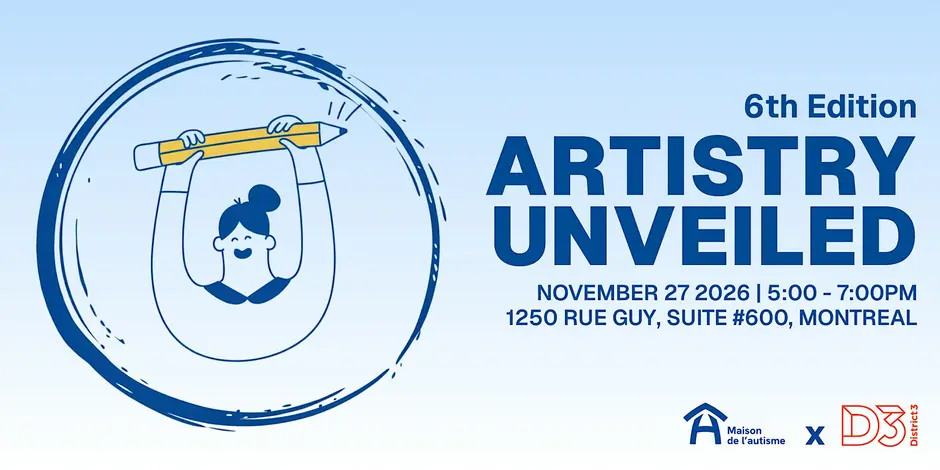
Join us for Artistry Unveiled, the 6th edition of our art market and exhibition featuring the incredible work of autistic artists.
Looking for the perfect holiday gift or simply a night of inspiring art? Join us for Artistry Unveiled, the 6th edition of our art market and exhibition featuring the incredible work of autistic artists. This holiday-themed evening promises a unique celebration of creativity, community, and connection.
What to Expect:
A curated art exhibition and market showcasing the talent of autistic artists
Opportunities for networking and meeting the artists
Whether you’re shopping for unique holiday gifts or simply want to admire beautiful artwork, this is an event you won’t want to miss.
Come celebrate the artistic talents of the autistic community and enjoy an unforgettable evening!
Grâce au programme PSOP du Gouvernement du Québec, un grand projet a été mis en marche il y a environ un an pour donner une nouvelle vie à la Maison de l’autisme sur le web. L’expérience vécue étant une priorité dans l’orientation de l’organisme, le projet a été confié en majorité à des personnes autistes, dont moi! J’ai débuté sur le comité de mise en œuvre du projet à titre de bénévole pour amener mon expérience dans le domaine. J’en suis finalement devenu le chef de projet quand l’équipe a constaté que je connaissais bien le sujet et que j’avais la capacité d’exécuter nos idées.
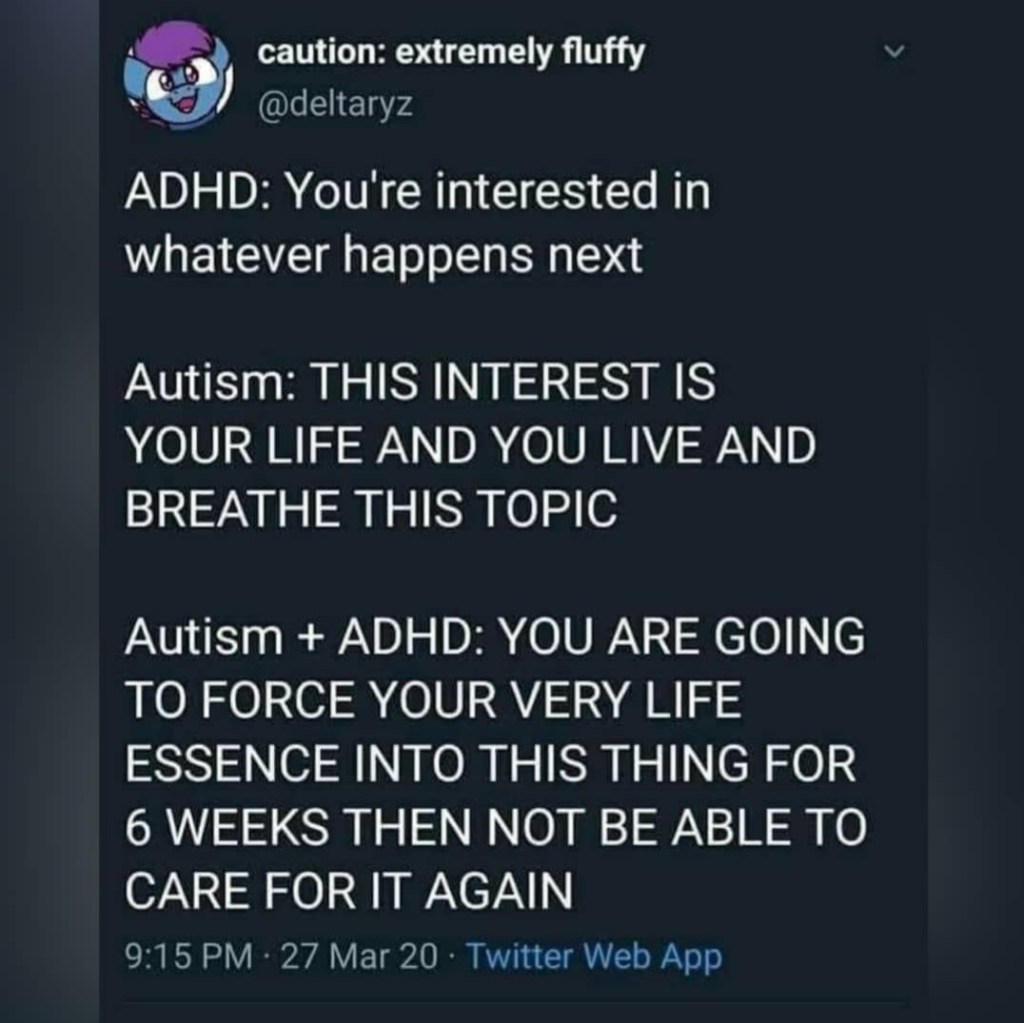
Comme j’ai eu mon diagnostic tardivement, j’ai eu une vie professionnelle très éparpillée et par la bande, je suis devenu un touche-à-tout assez efficace. J’adore apprendre et comprendre et j’ai grandi pendant l’apparition d’internet. J’ai donc instinctivement voulu savoir comment ça fonctionnait et ça m’a servi des années plus tard de façon professionnelle. Je suis autodidacte et j’en suis fier! Mon merveilleux combo AuDHD (autisme et TDAH) m’a amené à avoir de multiples intérêts spécifiques qui m’ont fait acquérir un tas de connaissances, souvent inutiles en apparence. Je me suis vite rendu compte que cette curiosité pouvait être récompensée dans les milieux professionnels car on devient essentiel au bon fonctionnement quand on s’avère être le seul qui sait réellement comment fonctionne les choses qu’on utilise au travail; un sauveur discret au quotidien.
Le contrecoup, c’est qu’en absence de diagnostic, j’ai simplement chercher à faire comme tout le monde et j’ai vite atteint mes limites. Je me suis brûlé à plusieurs reprises à travers le chaos de mes emplois disparates qui ne me convenaient pas vraiment sans trop comprendre pourquoi car j’étais souvent surcompétent. Ma perspective abruptement réaliste n’est pas bien perçue en général et peu d’employeurs en ont tiré profit. Les épisodes de burn-out, de dépression et de découragement s’enchainaient de plus en plus rapidement et j’en paie aujourd’hui le prix. C’est donc encore plus gratifiant quand sa valeur refait surface lentement à travers un projet qui me ressemble vraiment. Sentir qu’on croit en mes capacités sans même regarder mon C.V. pour mener un projet d’envergure et qu’en plus on a besoin de mon regard différent dans le processus… ça m’a réellement mis en confiance.
Je n’avais jamais fait un tel travail de A à Z sur un site web où je jouais plusieurs rôles (producteur, mise en ligne, conception, intégration visuelle, adaptation du contenu etc.). Heureusement, la grande majorité du contenu a été créé par l’équipe (Ève-Marie Beaudoin, Elizabeth Dion, Mourad Rhanem, François Dionne, Yann Lafleur, Jean-Pierre Trzcinski et bien sur Rosemary Maratta) et la charte graphique était définie par Paul Geiben. Il fallait seulement un chef d’orchestre pour que tout s’assemble de façon harmonieuse…
Et c’est fait !
…mais nous avons besoin de vous!
Ayant eu recours moi-même au précieux groupes de soutien, j’étais le premier à vouloir un nouveau site web pour un organisme qui mérite beaucoup plus de visibilité!. Un look simplifié et efficace. Des ressources dirigées vers les gens qui en ont besoin. Des systèmes pour alléger la tâches des bénévoles. Une plateforme ouverte qui nous amène plein de nouvelles possibilités! Nous avons refait le tout en ayant toujours les personnes autistes en tête. Et leur entourage bein… il vont enfin voir de quoi une gang d’autistes sont capable quand ils se mettent ensemble!
Notre but est de fournir un nouveau portail pensé par et pour des personnes autistes avec des diagnostics tardifs et pour leur entourage. Nous voulons fournir des témoignages, des blogues et des ressources qui aident nos pairs à naviguer à travers le processus souvent ardu vers la découverte de soi-même à travers le spectre de l’autisme.
Nous voulons que se soit interactif !
À terme, nous souhaitons que cet espace soit pris d’assaut par tous ceux qui se sentent concernés pour que votre parole s’ajoute à la nôtre. Voici des exemples de ce que nous avons en tête:
Des ressources externes qui ont déjà fait le travail pour la communauté (diagnostique, soutien, information)
Des blogues sur la réalité des personnes autistes créés par la communauté
Ce que nous voulons ajouter:
La capacité d’interagir avec le contenu pour commenter, pour communiquer avec les auteurs ou ajouter votre contribution
Un portail d’usager qui vous permettrait de voir rapidement vos contenus préférés, vos communications avec d’autres personnes ou avoir des informations sur votre inscription à nos services
Un espace pour échanger entre nous; discussions, rencontre, activités aide mutuelle ou coup de pouce sporadique…
Une ouverture à écouter et mettre en branle vos idées car votre voix compte!
Pour que vous puissiez voir une partie du travail caché qui doit être fait pour le site web, voici un vidéo en accélérée de l’adaptation graphique des illustrations avec les couleurs du site. Très satisfaisant à regarder même si c’est moi qui l’ai fait 😉
Libridé – Conception et production
Coordonatrice pour le programme PSOP : Ève-Marie Beaudoin
Comité de production : Ève-Marie Beaudoin, Elizabeth Dion, Mourad Rhanem, François Dionne, Yann Lafleur, Jean-Pierre Trzcinski et Rosemary Maratta.
Paul Geiben – Image de marque de la Maison de l’autisme
Kai Pretto, M.A., CCC-SLP, an Autistic speech-language pathologist and researcher, combines their specialised knowledge as a practitioner and researcher with both clinical and lived experience to provide a more nuanced understanding of the function of echolalia in Autistic and otherwise neurodivergent communication. They will explore how echolalia—a form of vocalization that many still see as “non-functional”—taps into ALL functions of language: Requesting; Protesting & Rejecting; Commenting & Sharing Observations; Asking & Answering Questions; Expressing Feelings & Emotional States; and Social Routine & Connection. They will further discuss the intersection of echolalia with Gestalt Language Processing (GLP) and how different stages of gestalts require different levels of communication partner engagement and support. Additionally, they will provide insight into the functions of echolalia as a “social glue” and an important form of coregulation for Autistic and otherwise neurodivergent communicators of all ages and communication abilities.
Présenté par : La Maison de l’autisme et District 3
OÙ : 1250 Rue Guy, Suite #600, Montréal
QUAND : vendredi 8 mai 2026, 17:00 – 19:00
PRIX : Gratuit
Rejoignez-nous pour la 5e édition de notre marché d’art et exposition annuelle L’art dévoilé mettant en valeur le travail remarquable d’artistes autistes.
Un cadeau porteur de sens, de beauté et d’intention ✨
Si vous cherchez à offrir à votre mère quelque chose de vraiment spécial pour la Fête des Mères — quelque chose qui raconte une histoire et qui redonne — L’art dévoilé : Un Vernissage printannier est l’endroit idéal pour commencer.
Rejoignez La Maison de l’Autisme chez District 3 pour la 5e édition de L’art dévoilé, un marché d’art et une exposition célébrant la créativité remarquable d’artistes autistes. Cette édition printanière transforme l’art en connexion, en impact et en intention, faisant de chaque œuvre bien plus qu’un simple cadeau.
Accueilli dans l’espace de coworking baigné de lumière du District 3, cet événement reflète notre mission de rassembler les gens autour de la créativité, de l’inclusion et des liens qui ont du sens.
Que vous soyez à la recherche d’un cadeau sincère pour la Fête des Mères ou simplement d’une soirée inspirante entourée d’art et de notre communauté, cet événement offre une expérience fraîche et profondément significative.
Ce qui vous attend :
Une exposition et un marché d’art soigneusement sélectionnés, présentant des œuvres originales d’artistes autistes
L’opportunité de rencontrer les artistes et de découvrir les histoires derrière leurs créations
Un art qui soutient l’inclusion, le talent et le sens
Offrez un cadeau qui compte — ou gardez quelque chose de précieux pour vous-même — tout en célébrant les voix artistiques de la communauté autiste.
Join us for Artistry Unveiled, the 5th edition of our annual art market and exhibition featuring the incredible work of autistic artists.
A Gift with Meaning, Beauty, and Purpose ✨
If you’re looking to gift your mother something truly special this Mother’s Day, something that tells a story and gives back, Artistry Unveiled: A Spring Vernissage is the perfect place to begin.
Join Autism house at District 3 for the 5th edition of Artistry Unveiled, an art market and exhibition celebrating the remarkable creativity of autistic artists. This spring edition transforms art into connection, impact, and intention, making every piece more than just a gift.
Hosted in District 3’s light‑filled co-working space, this event reflects our mission of bringing people together around creativity, inclusion, and meaningful connections.
Whether you’re searching for a heartfelt Mother’s Day present or simply an inspiring evening surrounded by art and community, this event offers a refreshing and meaningful experience.
What to Expect:
A curated art exhibition and market featuring original works by autistic artists
The opportunity to meet the artists and learn the stories behind their creations
Art that supports inclusion, talent, and purpose
Give a gift that matters or keep something special for yourself while celebrating the artistic voices of the autistic community.
Présenté par : La Maison de l’autisme et District 3
OÙ : 1250 Rue Guy, Suite #600, Montréal
QUAND : 28 Novembre 2025, 17:00 – 19:00
PRIX : Gratuit
Vous cherchez le cadeau parfait pour les temps des fêtes ou simplement une soirée d’art inspirante ? Joignez-vous à nous pour Art dévoilé, la 4ᵉ édition de notre marché et exposition d’art semi-annuel mettant en lumière le travail incroyable d’artistes autistes. Cette soirée sur le thème du temps des fêtes promet une célébration unique de la créativité, de la communauté et des rencontres.
Au programme :
Une exposition et marché d’art mettant en valeur le talent d’artistes autistes
Opportunités de rencontres et d’échanges avec les artistes
Nourriture et boissons pour profiter de la soirée
Que vous cherchiez des cadeaux du temps des fêtes uniques ou que vous souhaitiez simplement admirer de magnifiques œuvres, cet événement est à ne pas manquer. Venez célébrer le talent artistique de la communauté autiste et vivre une soirée inoubliable !
Tout soutien serait grandement apprécié et contribuera énormément à faire une réelle différence.
Join us for Artistry Unveiled, the 4th edition of our annual art market and exhibition featuring the incredible work of autistic artists.
Looking for the perfect holiday gift or simply a night of inspiring art? Join us for Artistry Unveiled, the 4th edition of our annual art market and exhibition featuring the incredible work of autistic artists. This holiday-themed evening promises a unique celebration of creativity, community, and connection.
What to Expect:
A curated art exhibition and market showcasing the talent of autistic artists
Opportunities for networking and meeting the artists
Food and drinks to enjoy while you explore the exhibition
Whether you’re shopping for unique holiday gifts or simply want to admire beautiful artwork, this is an event you won’t want to miss. Come celebrate the artistic talents of the autistic community and enjoy an unforgettable evening!
OÙ : Centre Trois-Saison, 1390 rue Buffon, G2E 4X4, Québec
QUAND : 20 Novembre 2025, 18:00 – 19:30
PRIX : Gratuit membre/ 5$ non-membre, réservation obligatoire
Rappel: ce jeudi 20 novembre, 18 h à 19 h30
Atelier Mieux comprendre l’autisme : quelques notions de base
L’autisme peut se manifester de façons très diverses d’une personne à l’autre. Venez en apprendre plus sur ses principales caractéristiques, mieux comprendre ses multiples visages et découvrir comment mieux accompagner les personnes autistes au quotidien.
Lieu: Centre Trois-Saisons (1390, rue Buffon, Québec, QC, G2E 4X4)
Coût : Gratuit pour les membres /5$ pour les non-membres
You want fewer power struggles and more real conversations with your teen.
You’re ready to stay calm when emotions spike instead of getting pulled into the chaos.
You want a clear, science-based understanding of your teen’s brain and behavior.
You need practical ways to set limits that keep respect and connection intact.
You’re looking for tools that make everyday family life easier — without yelling, lecturing, or bribing.
Join thousands of parents and educators learning how to bring peace back home — with research-backed tools, relatable stories, and practical steps you can use right away.
Autism Canada is proud to present this year’s annual Au-Some Conference on October 25, 2025 from 10 AM – 3 PM EST, during Autism Acceptance Month. The Au-Some Conference is the only Canadian conference in which all of the presentations are created and delivered by neurodivergent individuals, sharing their lived experiences and enriching the lives of everyone in attendance.
It is a day for people to learn about the diversity of the Autism Spectrum and where, together, we will create an inclusive environment for sharing successes and for creating acceptance for those on the spectrum, caregivers and communities.
Now in its 9th year, the Au-Some Conference is a free, national conference presented virtually to allow us to bring it to hundreds of people in every region of Canada.
My son was diagnosed with ASD when he was 14 years old. As a toddler, he had some language delays, which I attributed to him being in a trilingual environment. When he was 3 years old, the educators at his daycare remarked that he often stood on the side observing rather than getting involved when animators from the outside came to do dance and theatre classes. Nobody, except me, talked about autism at the time, in fact the daycare providers assured me that he showed no signs of ASD. Instead we were referred to a speech-language therapist who discovered that his linguistic comprehension was at a very low level. The language therapist worked with him until he started kindergarten and he made great progress, to the point where they saw no need for any additional support when he stared school. He went through elementary school without any problems and had a good group of friends. It was only when he started high school that things got really challenging both socially and academically and finally he himself asked to be evaluated for ADHD, which led us to the ASD diagnosis.
If I had known at an early age that my son was on the spectrum, we would have saved ourselves tons of frustrations over the years and would have had a better understanding for his rigidness, refusals to wear clothes that he was not used to, his tantrums when a playdate was over etc, etc. We also would have been able to seek professional help to better prepare him for high school and to work on things which are challenging for him. I knew very little about ASD before he was diagnosed. Over the years, I had seen signs of ASD in my son but I did not understand the implications of being autistic and the challenges and micro aggressions that everyday life poses to an autistic person. I believe my son is good at masking but it eventually led to an autistic burnout where he was no longer capable to go to school or even attend family gatherings. If we had been aware of the diagnosis earlier, I could have read up on ASD, look for support groups, and have started to navigate the system to find resources and help. If you as a parent have just learnt that your child is autistic, you may be overwhelmed with emotion and, possibly, denial or doubt about the diagnosis. I believe however that the fact that you now know that your child is on the spectrum, will allow you to be open to learn more about it and to become better equipped to accompany your child. It does not mean that you need to look for signs that may not be there or that you have to start parenting differently, it will simply widen your horizon.
Inspiring through words: the journey of Jordan Nanos
1 avr. 2024
1 min de lecture
by Patrick Millette and Jordan Nanos
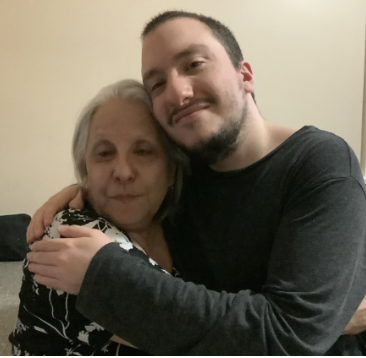
In a world where the power of words can uplift spirits and spark change, Jordan Nanos stands as a beacon of inspiration. A talented author diagnosed with 22q, Jordan’s story is not just about his diagnosis but also about his resilience, kindness, and unwavering determination to make a positive impact through his writing.
Discovering the Passion:
Jordan’s journey as a writer began when he was a teenager. « I started writing when I was seventeen years old and instantly fell in love with it,” he shares. Writing became a love affair that blossomed quickly, leading him to pen his inaugural book at eighteen. His motivation? “I wrote the book because I wanted to make a change and a difference in the world”. Jordan found happiness in his writing endeavours, which boosted his confidence. “When I write it always gives me a positive attitude because it gives me confidence. My writing makes me believe in myself”.
Navigating Challenges with Grace:
Jordan’s writing journey hasn’t been without its share of obstacles. Yet, with unwavering determination, he has navigated through them with grace and resilience. “I’ve learned that you need to not give up on your writing. I’ve learned that if you believe in yourself anything is possible”. Each challenge became an opportunity for growth, a chance to reaffirm his belief in himself and his craft.
Jordan strengthened his writing ability through practice and dedication. He found it helpful to discuss his ideas with people around him whenever he wrote. “I would practice at it and face it by having conversations with others. I would make sure what I say makes sense to the other person.”
Jordan believes that writing can boost confidence and spread kindness. He hopes to inspire others to pick up the craft. His advice for people who are interested in writing is to “take it one day at a time. Patience is a virtue when it comes to writing. You have to be committed to your writing”. Jordan is an inspiration to many people.
Spreading Kindness, One Word at a Time:
Through his books and writings, Jordan Nanos seeks to spread kindness. Throughout his writing, he encourages his readers to approach the world with compassion and understanding. “My writing can help others feel that they’re not alone. It can help others be more thoughtful and helpful towards each other. It can teach others to fight for what’s right when they’re feeling down. It can help to show others that being different is ok”.
His writing serves as a gentle reminder to others that they’re not alone in their struggles. It encourages empathy, prompts thoughtful gestures, and empowers individuals to stand tall and embrace their uniqueness. ”The message is never to give up. You can always be proud of who you are”. To Jordan Nanos, spreading kindness is vital, and he wants to encourage his readers to spread kindness throughout their lives. “Don’t be shy when you have something to say in a positive way.”
Jordan wants to inspire others to spread kindness. He does this throughout his books and finds creative ways to spread kindness during special occasions like the holiday season. When you spread kindness through the holiday season you’re showing others that you can do anything that you can put your mindset to. » Throughout the holiday season, Jordan goes out of his way to write Christmas cards for his friends and family. This is a perfect example of utilizing your talents to spread positivity and kindness. For him, spreading kindness during this magical time isn’t just about grand gestures; it’s about embracing the spirit of togetherness, hope, and possibility.
Beacon of Light:
In the tapestry of life, Jordan Nanos’s story stands as a vibrant thread, weaving together the essence of resilience, kindness, and the transformative power of words. Through his writing, he invites us to embark on a journey of self-discovery, empathy, and hope. As we navigate through the pages of his life, may we be inspired to embrace our own unique stories, to spread kindness wherever we go, and to believe in the extraordinary potential of the human spirit. Jordan Nanos isn’t just an author; he’s a beacon of light illuminating the path toward a brighter, kinder tomorrow.
There have been a lot of changes over the last decade of my life, but one constant. I have been a victim of stalking and cyber-harassment (which is just a very specific form of stalking) for the last ten years. It started in Texas with multiple instances of the same man approaching me in person and online. It continued when I moved to Québec, though it is exclusively online for now.
As an Autistic woman, this stalking has made my life extremely difficult from an organizational and emotions-management standpoint. For about a year, it also made it difficult to get my Vitamin D. Victimhood is not easy for anyone, but I want to explain how being a victim of stalking is even more complicated for an Autistic person. I will explain how these events have affected me personally, illustrate how it affects my relationships to others, and discuss how the solutions that are available in society are not adapted to the needs of Autistic people.
Need for routine
One of the first recommendations you will receive when being stalked is to abandon routine and habits. It makes sense. If you use the same path to walk to your car at the same time everyday, then it is easy for someone to learn your routine and insert themselves into it. Same with, say, having a favourite bookstore.
On the contrary, one of the more famous quirks of Autism is our reliance on routines. We aren’t like this just because we want to be difficult; we need predictability to function. Surprises require more on-the-fly thinking, which is a common challenge for Autistic people. I am no different.
I need my routine to keep track of my keys, remember to feed my dogs (and myself), and to wake up on time. Without routine, I struggle with the basic-life organization that more normative people call “adulting”. I could not live in an environment where evasion was a daily goal. In the end, it felt like I had the choice between retreating entirely or living with regular, dangerous interruptions due to stalking. I chose to retreat to another country. It gives me room to breathe, but it still negatively affects me –frequently.
Difficulty reading danger
Another difficulty that’s somewhat unique for Autistic stalking victims is that reading the danger of a situation is very context-specific and can be confusing. Behaviour that makes sense to an Autistic person can be very dangerous coming from other people. For example, when I was bullied as a child, I kept getting up and repeatedly put myself in situations where I could have been rejected. Over practice (and some help from puberty), I developed the social skills that garnered me a minor, but peaceful social existence. For me, I respect when people try again and again, but in this case, it is not healthy nor respectful. That said, it took me years to recognize that I was being stalked because, to me, he was just trying really hard.
Another example of this is a lot more harrowing now that I am aware of the connotations. One time, around one in the morning, he confronted me in my apartment complex’s laundromat. For me, I was overwhelmed by the hyper-social nature of Texas social norms, so the surprise that someone was hiding in the dark for me was no different than the stress I experience when someone else is using the laundromat at the same time as me. I just didn’t want to engage in small talk or anything like that. Both situations were annoying in an overwhelming sense, but I had to cope with being overwhelmed all the time.
Before I even realized that I like being closer to the door than the people around me (I also have PTSD), I had ”played it cool” to the point that I was further into the laundromat than he was, making him closer to the door than me. In other words, I walked right into it. Keep in mind that this is Texas. It’s a violent place and he, later on, threatened my life. What sort of weapons or intentions resided in him? No one knows because, in my attempt to play it cool, I eventually got him talking. I learned that he was there because he was obsessed with me and he was moving away in a few weeks.
He had envisioned meeting me as a last hurrah. I have no idea what would have happened if I hadn’t pretended to want his number. Certainly he’s so unstable that even he doesn’t know what he intended if I openly blew him off. That said, the danger inherent in a “last hurrah with a woman you’ve been obsessed with for many years” did not occur to me until about a year after I walked out of there. My avoidance for the year after that event was simply my frustration with unexpected social interactions. About the same time I realized the danger I had been in was about a month after he started making unsolicited comments to me about having a gun. I was like a lobster in boiling water.
Strategies that don’t make sense on first impression
Another thing that affects stalking victims is that their strategies of stalker-management rarely make sense on first glance. Experts in the field themselves do not agree on how to manage prolonged cyber-harassment, so victims often have to make their own decisions about how they want to manage the threat.
I have years of evidence of his stalking and harassment due to my strategies, but it’s really hit-or-miss if I am able to explain the methodology to another person. When making my strategy, I just did not care how it looks to other people, so I allowed cyber-harassment on my public posts from a single Facebook account of his for one main reason: the harassment doesn’t stop when I block him and it’s easier to prove all the harassment is coming from the same person if I allow him one account that I do not block.
I’ve since abandoned this strategy because it was causing social rifts with people perceiving me as “letting it happen” or “wanting it”. Because I am on the spectrum, and because this factoid was public knowledge, people were highly critical of my management strategies, rather than accepting that I had consulted experts and built my own expertise. Ultimately, I just wanted good evidence to put this devil-on-my-back away for a long time and I did not care how other people perceived it.
Difficulty communicating
I’ve already hinted at this a little, but stalking is already a difficult crime to communicate because the danger comes from the fact that it’s not a single occurrence. Additionally, there’s some classical conditioning that happens. Not every act of stalking is sinister on its face. However, every act is a reminder that the sinister acts of stalking did happen, could happen again, and might escalate. What a stalking victim feels is not easily communicated.
…With police
If you’ve read this far, you’ve probably wondered if I’ve ever contacted the police. There may even be a few comments from people who didn’t finish reading this who are convinced that this would not happen if I had just contacted the police. Sadly, people’s reactions to this crime I experience are becoming more and more predictable to me. However, I did actually try to talk to the police about this crime. A lot.
There are significant communication differences between what police expect from a victim and what comes out of an Autistic victim. There’s a book and a lot of academic papers about it. In some countries, such as the UK, due to these differences, an Autistic victim can ask for an investigator to report to who is specially trained to communicate with Autistic victims.
I would love to see something like this in Quebec, as I’ve had mixed experiences reporting my stalker’s activity here. Sometimes they are very understanding, but one time I got dragged out instead of being allowed to report the crime occurring against me. As a result, I have a deal with my éducateur spécialisé where he goes with me to the police station to report my stalker’s more sensational threats.
I can’t imagine still having this problem in Texas, where I am from. There are no éducateurs/éducatrices spécialisé.e.s in Texas, but they should not be needed anyway. I am lucky that, right now, the stalking behaviour is exclusively cyberharassment, which is Criminal Harassment in Canada, a serious crime punishable by up to 10 years in prison. This lack of urgency, due to the distance, means that I can wait a few days after I receive an especially salient threat for my éducateur spécialisé to be available to go to the police station with me. If the threats were occurring in person, I would not have the time to wait and we would be back to the same problem. For a whole year in Texas, when the stalking escalated to in person contacts, I left my house as little as possible out of fear, cutting me off from sunlight.
While still in Texas, I tried interacting with the police through a very helpful women’s shelter, but they had no knowledge of Autistic communication so they did not really understand the problem either. It did not help that their funding comes from domestic violence grants and I never dated this man who is stalking me. Autistic crime victims need more than just helpful people, though they do help; we need specialized support when we go to report to the police.
…With friends and care workers
There are social challenges in just being an Autistic person, but stalking adds another layer. I often feel like I am on trial as a victim with the people around me such as friends, acquaintances, and care workers. There’s high stakes to strike the right tone with your victimhood/survivourness and absolutely no one to learn it from. This means that minor grievances, such as the way I give walking directions, can transform into full critique of my life, such as the way I manage my victimhood, quite rapidly.
Everyone has an opinion about how they would handle it if they were you. It’s hard enough to be a victim of a serious crime with heavy psychological effects on my person, but there is an extra layer that comes from people criticizing my decisions, good ones and faults, as everything is under a magnifying glass. This is an extra social challenge to negotiate. No one wants their decisions under a magnifying glass, especially as a result of a crime. As an Autistic person, additional social challenges can feel like an insurmountable mountain. It has been much harder to build my new circle of friends here in Québec as a result.
Sensory issues and communal shelters
Lastly, stalking victims are often pushed to start over in the shelter environment. This is because starting over is very spendy, but, even when you’re not disabled, stalking conflicts with generating income. The emotional experience of stalking is another weight on your “adulting” skills and the act of stalking often interferes with employment. Thus, the free shelter enters.
But there’s a huge caveat. Autistic people can be too sensory sensitive and socially different to survive in communal environments (without other Autistic people).
While some shelters can place a person in a private room, crowding and understanding are barriers. Most shelters do not recognize the specialized needs of Autistic people well enough to accommodate them. Personally, I could never have started over if I hadn’t been especially good at crowdfunding and then also had some seriously lucky outcomes. One time, when I was a homeless new arrival in Trois Rivières, the CLSC paid for me to stay in a cheap motel for the weekend and then placed me (and my dogs) in supported Autistic housing the following Monday. This was especially lucky because I had nowhere to go, crowdfunding was in a lull, and staying at the only shelter in town was also not an option. One of the many reasons why I volunteer my writing to Autism House is because they are aware of the Autistic community’s specialized housing needs and their goal is to eventually provide it. I think that will save lives we haven’t even heard about yet.
Overall, stalking is a difficult crime whether or not you are Autistic and this review of our unique challenges as stalking victims is not intended to downplay other stalking victims. It is always hard and there is always someone who has survived worse. Before the 90s, neither stalking nor Autism were widely recognized, but the confluence of the two has some unique traits that, frankly, suck. Every year, both issues gain general awareness in the global zeitgeist. I hope that this work can make a meaningful contribution to both as well. Please share!
Hi, I’m Sara and I’m a 38 year old autistic woman.
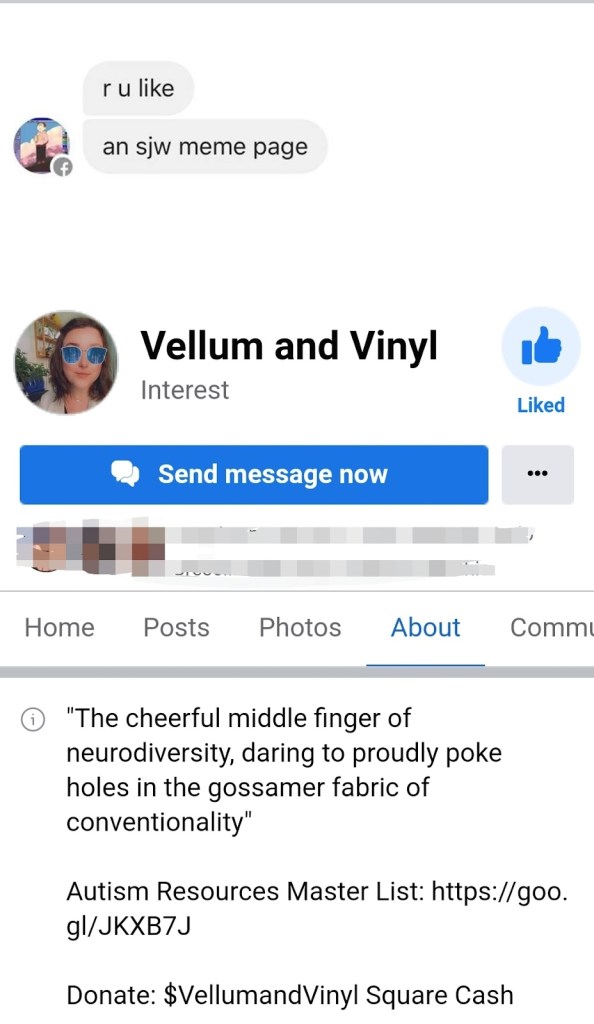
In 2016 or 2017 I reconnected with an old friend from CEGEP on Facebook. This friend regularly shared content about neurodiversity, autism and ADHD because they had just been diagnosed autistic themselves. As I had been diagnosed with ADHD in 2013 and already had an interest in neurodiversity since my first diagnosis, I read a lot of those posts and found them interesting. Then I started following the same neurodiversity and autism pages that those posts were shared from (most notably one page called Vellum and Vinyl).
I spent a few years reading about those topics and joined a few autistic Facebook groups (where self-diagnosis is widely regarded as valid!) and learned how much overlap there is in traits between autism and ADHD. I also had a coach who was autistic as well who I clicked with better than anyone else before, and I found a list of autistic traits in women that I identified with by 90%. So in 2018 I decided I wanted to get an assessment, and fortunately the neuropsychologist who had assessed my friend was local and also familiar with how autism presents in adult women. I was very grateful as professionals who are familiar with how autism presents in adults, and especially in women, are few and far between.
It cost a lot of money (1k+) so I had to wait till I got my income tax return in March of 2019 to be able to call the Montreal Neuropsychology Center and request an appointment with Dr. Tamara Soles. I waited till September and finally saw her, I liked her a lot and the appointment went well and I got my diagnosis verbally on the spot (and in writing later). I cried from relief, knowing that I’m not a broken neurotypical, I’m a perfectly good autistic, and that I have a community of people I can call my own 😃
It took a while for it to sink in, I remember thinking « wow I’m really autistic! ». Many adult discovered autistics grieve about not having known sooner when they received their diagnoses. For whatever reason I didn’t go through that grieving period, I was just like « ok great what now? » The « what now » for me turned out to be being able to be a lot more self-compassionate now that I knew I shouldn’t expect to be able to do things the same way as neurotypicals, or even do the same things at all. It was very validating to know why I had struggled so much in school, that I wasn’t stupid or lazy. The education system and academia in general is not built for neurodivergent minds and is very inaccessible to many of us for that reason.
Knowing my brain was different from those that society had been built around went a long way towards unlearning a lot of the internalized ableism I had. I no longer expected myself to be able to perform to the same level as others or on the same timeline as others. My brain isn’t built for high-stress, fast-paced environments, the exact ones that I had been thrust into my whole life, especially in restaurants where I worked after cooking school. This caused me two burnouts. But now I know it’s not my fault, I was simply in environments that weren’t suited for me. Thankfully I’ve found a wonderful neurodiversity-affirming, trauma-informed support network and neurodivergent community that is helping me find the right environment and resources for me. This has led me to learn a lot over the past 10 years about neurodiversity, the pathology paradigm and trauma healing, all of which I am hoping to write about in future blog posts.
The Times of COVID in Montreal: An ASD Perspective
1 avr. 2022
4 min de lecture
Dernière mise à jour : 10 mars 2024
By Éric Caissie
When I first heard about the corona virus it was in late January 2020. I didn’t think it would become a worldwide health crisis though. Going through all the different opinions and concerns of people online and offline was pretty worrisome and a bit scary. For a person who likes to obey the rules and tries to be part of the solution and not the problem like me, living in downtown Montreal is not that easy.
When people started to react and go crazy with shopping, like pretty much everyone else we jumped on that train and got some reserves in case of emergency. Now I feel I have enough toilet paper to last me forever, I have some in my car, at my parent’s place and in my apartment. Because I live in a 3-1/2, I don’t have that much space and our fridge is like a ¾ size one, so it’s a bit hard to keep frozen and refrigerated foods. But we did it and we stacked up on non-perishable and cleaning supplies.
With the news being not that specific when COVID was beginning to spread, saying wear a mask, don’t wear a mask, businesses are closing, etc. It is hard to have confidence in whoever is giving advice. Like anybody, I have my own belief and opinions, but I think if everyone follows the rules it would go a lot faster.
Self-containment wasn’t that hard as I lost my employment in mid-January and didn’t have to go to work. Although, since so many businesses are closed, trying to network and find a job is pretty hard right now. Especially since I’m trying to pivot my career into something I actually might enjoy. I spend most of my time looking online for opportunities, writing music, updating my website, and taking little courses on Udemy in creative arts and business to help me jump in this new tech world we’re in.
Since I’m very busy with my hobbies and projects, my days fly by. I put in around 12 hours a day without seeing the time pass, then I eat and relax with a tv show. I can repeat this for a long time without feeling the need to go out. I know it’s not the best, but I’m working on it. I wish the gyms were open as I’m in need of some good exercise.
On weekends I like to go to my parent’s place on the south shore. We use their backyard to see them while respecting the mandatory distances. We relax, enjoy the sun and make my dog Joey play and run.
Living downtown Montreal, I see people walking all the time even when COVID was at its worst peak and city-wide restrictions were in place. It made me realise how many people are different from me and really have the need to get out, or maybe some people just don’t care. Parks were full, tickets and fines were handed out to people not obeying the rules. I can understand if someone doesn’t have hobbies or is not taking courses or not working, they can go a bit stir-crazy, I wouldn’t know what to do all day if I didn’t have my projects.
I find that this is a perfect time to put everything on pause and reflect and learn something new, we don’t have that many chances in life to have that much time. Of course, I’m talking as a person who doesn’t have kids, I can’t imagine what someone must go through with kids in an apartment in the city.
Now stores are opening bit by bit and measures are being taken to enforce people’s safety. The lineups in Montreal are getting very long and it’s hard to stay at 2 meters from everyone when there is so much construction. At this time, I think everyone is being careful, but only time can tell what’s going to happen.
With self-confinement, the digital world got bigger, video chat apps such as FaceTime, Skype, Zoom, Google Hangout got a lot of attention and made everyone jump on the tech train and learn a few things at the same time. Some are working from home and are still on top of their game. I think a lot will change after the corona virus is over, the way we live and work.
I go out to parks now, sit on the grass and relax with the fresh air. It’s a nice change since the beginning of social distancing where we were being discouraged to even go to parks.
I feel that people on the spectrum think more about the consequences, it gives us more stress and makes us a bit more careful. I don’t like hospitals; I try to avoid them. In my 38 years, I had one blood test and I was alone with the nurse at a private clinic. I hate needles (even if I have tattoos, it’s not the same thing). It’s the pulling out something from my body that stresses me a lot. So, there’s chances that with Covid I might have to go to a hospital, and this is what I’m trying to avoid. With all the stories out there, some people were very sick, and some were not, it brings out a defence mechanism in me that I’d rather just stay away and be in control of my environment.
I don’t particularly know what’s going on in other people’s head, or what their thoughts are, but sometimes I wish I could just care less and enjoy.
It’s time to start going back out, being inside for a long period of time makes it easier for triggers to appear. Walks, healthy food and exercise is a good way to help stay in control. Step by step everything will get back to normal and “things will get better”.
And losing patience wavers me and calms my angry sigh.
I understand sadness as it permeates my soul!
Taking away my potency and never leaving me whole.
Masking my feelings of worthlessness leaves me alone, full of regret,
Feeding my insecurities, taking time to forget.
‘Twas the ignorance of well-meaning people who started this charade!
That speaking words equals intelligence and fear led their parade.
Autistics who don’t talk have plenty of words to say.
I know as I am nonspeaking and wrote this here today.
Longing to say to hurtful looks, that I am not a freak!
Painful to many of us; forward and bleak.
Look at us, as love leaves lasting memories.
Love creates presence in awesome trajectories.
May people who don’t speak, learn to pursue answers, leaving the toll behind.
Making the leap into kindness, promoting inclusion for humankind.
That includes all of us, you and me.
Making the trip on this loving journey worry free.
The reward is already here, taking fearlessness into our hands.
Preparing for a life worth living; being proud and taking a stand!
Good times are ahead and the world is ready to see,
That nonspeaking autistics, speak their minds differently.
My name is Matthew McGrath and I am a non speaking autistic. I use a letter board to communicate. I am 18 years old and I live in Quebec. Advocating for the rights of non speaking autistics is my main focus. Making a difference in the lives of non speaking autistics leaves me always pushing forward. I am longing to lose the stigma that we are not competent and intelligent people.
Taking Care of My Students, Taking Care of Me: A Teacher in COVID Time
1 avr. 2022
2 min de lecture
A text by Michele Matthews
Autism Advocate, Aunt, Teacher
I was packing my instruments after my last Music Class on March 12 when the secretary came in my room to ask if I had travelled out of the country during March Break. I had, to Punta Cana. It was my first all inclusive vacation ever, but that’s another story! A few minutes later, all school staff were told not to come in the next day. I was kind of excited to get another (what I thought would be) short vacation right after returning from vacation. None of us realized what would come next.
By Monday, everyone but essential workers was in confinement. Everything had changed in a couple of days. It was a bit scary; no one really knew what was happening or what would happen. We thought we would be returning to school by the end of March, but that soon turned into April and then May and we were still at home.
Now things were getting a little stressful. As someone who has difficulty with anxiety and depression, I knew I needed a schedule and routine otherwise things might get hard for me. I live alone, so I had no one to take care of. All my students whom I normally support all day were no longer around. I made more of an effort to take care of me. I went on walks a couple of times a day. It was a great way to get fresh air, exercise, listen to music and build that regular routine that was so necessary. I read a lot more, cleaned a lot more and cooked a lot more. Things were good.
When remote learning began, it was a new stressor. It was great to connect with the students again through Zoom and FaceTime, but once I connected with them, I also connected with their families. I heard from parents who were struggling with having their autistic child home all the time. Some children didn’t understand and were extremely anxious that their routines had been disrupted. Some parents were overwhelmed with their special needs child and their other children at home trying to home school them and take care of them all at the same time. They had no reprieve. I started to feel their stress and wanted to take care of my students. I wanted to be safe and take care of me as well. Very slowly, I decided I needed to make my bubble a tiny bit bigger. In order to take care of me, I realized I had to take care of my students and their families. It was all intertwined.
It’s almost August and there are still many unknowns with regard to ‘Back To School’ in September. Whatever happens, I know I will be here to support my students and their families, because ultimately, that’s the way I take care of me. We will stay safe and healthy, and we’ll all take care of each other. It’s all going to be alright.
Back To School Goals: Autonomy and Self-Determination
1 avr. 2022
2 min de lecture
A blog by Michele Matthews
Autism advocate, aunt, teacher
We are going into our fourth week back to school after a six month shutdown. None of us really knew what to expect as students came back to the classroom. I am so very proud of my students. They have been able to adapt, be flexible and learn a whole new set of daily objectives.
As a Special Education teacher, one of my main goals is to promote autonomy and self-determination in my students. This was not always the case. When I was a new teacher starting out, I believed that I knew what was best for my students and their choices came second to that. Along with experience, education (and age!) have come new perspectives in teaching students with autism and other special needs and THEIR choices make up a big part of our day.
Autonomy looks different in everyone and in my classroom it takes many shapes and forms. From Daniel using real scissors, not adapted ones anymore, to Jake looking at a visual and following through with a direction on his own, to Abyaz knowing he needs an activity that will be calming for him, to Jayden saying “I don’t want to walk!!”, my students are increasing their autonomy and self-determination. They are becoming more independent throughout the day and it is our responsibility as educators and parents to encourage and reinforce that whenever we see it.
Various internet sources estimate that adults make 35,000 choices/decisions in a day. Wow. How many opportunities for this do we give our students? Something to think about. During the shutdown, many parents shared that it was so difficult to have their special needs child home all day, every day. Teaching, encouraging and supporting autonomy in every aspect of a child’s life can hopefully lead to adults who are able to be contributing members of their homes and communities. My students smile and are happy when they can make choices for themselves. That’s self-determination. I am sure they are proud when they accomplish things. None of them can completely tell me, but I see it on their faces. I hope they can see it on mine.
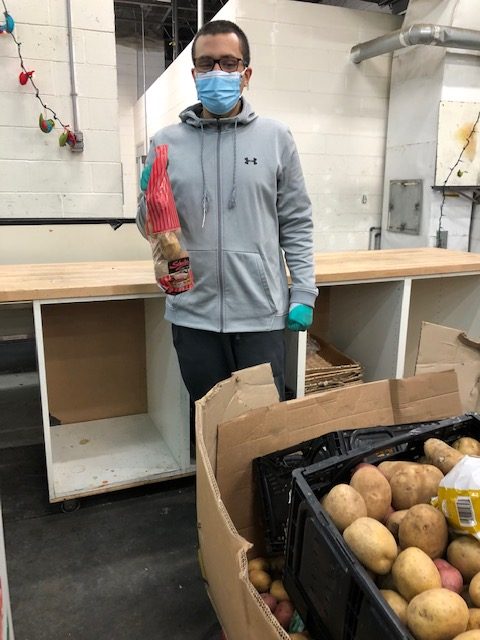
Neurodiverse adults are available and want to do meaningful work. With support, some will be very successful. Jonah is one of these people. At 22 years old, Jonah who is autistic, has been doing volunteer work at a local food bank since January. I accompany Jonah, and with minimal supervision and direction from me, he has become very dependable, very productive, and much liked among his co-workers.
Jonah who is verbal but experiences some challenges with communication, completed the following to explain things about his work:
When I’m working at the food bank, “I feel happy.” My favourite job is “packaging potatoes.” “I work from 9:30-12:30 and take a 15 minute break at 11:00.” I set a “timer” so that I’m not “late to start working.”
Jonah continues to express himself by circling the following points on a piece of paper:
“I do a good job!”
“I remember what I have to do”
“I like going to work”
“Working makes me happy”
As the number of neurodiverse individuals reaching adulthood increases steadily, it is crucial that more opportunities for building autonomy through meaningful work experiences are available for them. It is beneficial for the entire community when everyone has equal access to opportunity.
With the right fit, individuals are able to contribute in positive ways, and with opportunity comes the chance for increased autonomy in life. This is true for all of us and is no different for the neurodiverse.
Having a work place where he is accepted and needed has given Jonah more confidence. He is happy when working and proud of his accomplishments. He says he is not nervous. When asked for final thoughts from Jonah, he gets very excited, jumping up and down saying “I do so good!”
Jonah Languay is 22 years old, funny, hard working, a fast learner, loves videos and texting, and is autistic. He is a regular participant in Autism House activities.
Michele Matthews is a teacher and has been working in Special Education for 35 years. She is a board member and volunteer at Autism House and she is Jonah’s aunt.